Light recommendations
Light recomUnderstanding the Daily Light Integral (DLI) is essential for growers because it measures the total amount of photosynthetically active radiation (PAR) that plants receive over the course of a day. This metric is vital for optimizing crop growth and ensuring that each plant type receives the appropriate amount of light for its specific needs. Here’s why it’s important:
1. Direct Impact on Photosynthesis and Growth
Different crops have varying light requirements, and the right DLI ensures that plants receive enough light to drive photosynthesis. If a plant gets too little light, photosynthesis slows down, resulting in poor growth, smaller yields, and lower-quality produce. On the other hand, too much light can lead to plant stress or damage. By knowing the optimal DLI for each crop, growers can ensure plants get the right balance of light to maximize growth and productivity.
2. Crop-Specific Light Requirements
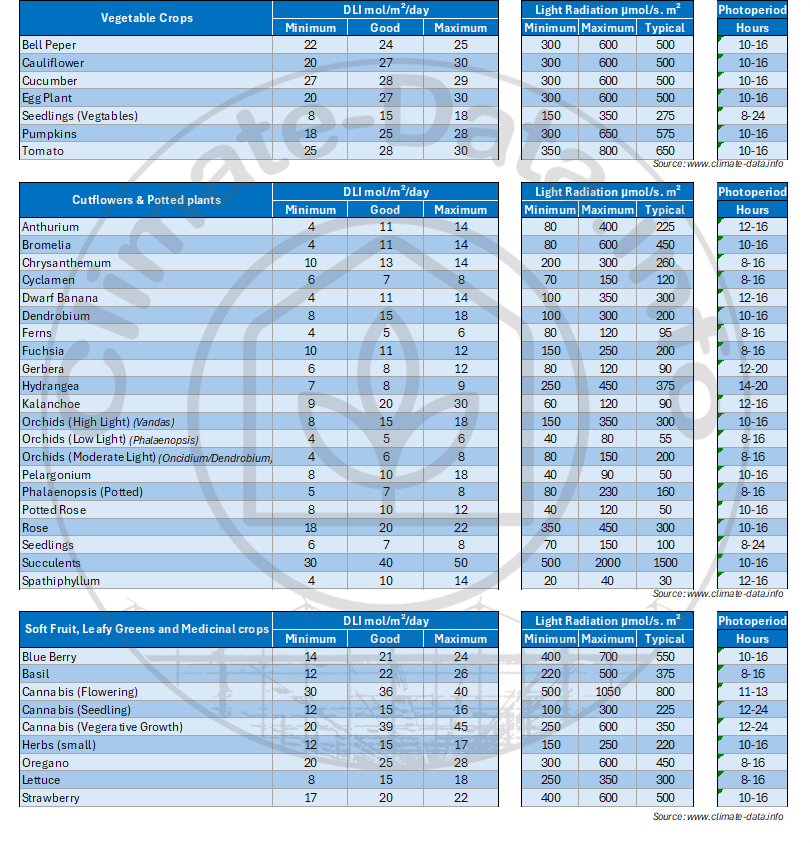
Crops such as tomatoes, cucumbers, and cannabis have higher DLI requirements, meaning they need more light to thrive, while leafy greens like lettuce or herbs can grow well with a lower DLI. If growers understand the specific DLI range for each crop, they can adjust light levels accordingly, either by adjusting natural light exposure or supplementing with artificial lighting during low-light periods. This targeted approach helps maintain consistent and healthy crop development.
3. Energy Efficiency and Cost Savings
Supplemental lighting in greenhouses is often one of the most energy-intensive inputs. By knowing the exact DLI requirements for a particular crop, growers can avoid unnecessary lighting, which can result in significant energy and cost savings. Instead of over-lighting or under-lighting plants, growers can tailor lighting schedules to match the crop’s exact needs, leading to more efficient energy use and reduced costs.
4. Improved Yield and Quality
Plants grown under the correct DLI conditions tend to produce better yields and higher-quality fruits or flowers. For example, crops with inadequate light may exhibit stunted growth or poor flowering, while those with optimal DLI often show improved flower production, fruit size, and overall quality. By controlling the DLI, growers can consistently produce high-value crops that meet market demands.
5. Year-Round Production
In regions with seasonal light variability, such as during the winter months, growers can use DLI data to ensure that supplemental lighting compensates for reduced natural sunlight. This allows for consistent, year-round production of crops that would otherwise be difficult to grow outside of optimal seasons.
6. Optimizing Greenhouse Technology
With the right DLI information, growers can better integrate technologies like shading systems, screens, and supplemental lighting to manage light levels more effectively. For example, shading systems can help prevent crops from receiving excessive light during the peak of summer, while supplemental lighting can ensure adequate light during winter.
In summary, understanding the right DLI for each crop is critical for achieving optimal growth, maintaining quality, improving energy efficiency, and maximizing crop yield. It allows growers to fine-tune their greenhouse operations, ensuring the perfect balance of light for each stage of a plant’s life cycle.